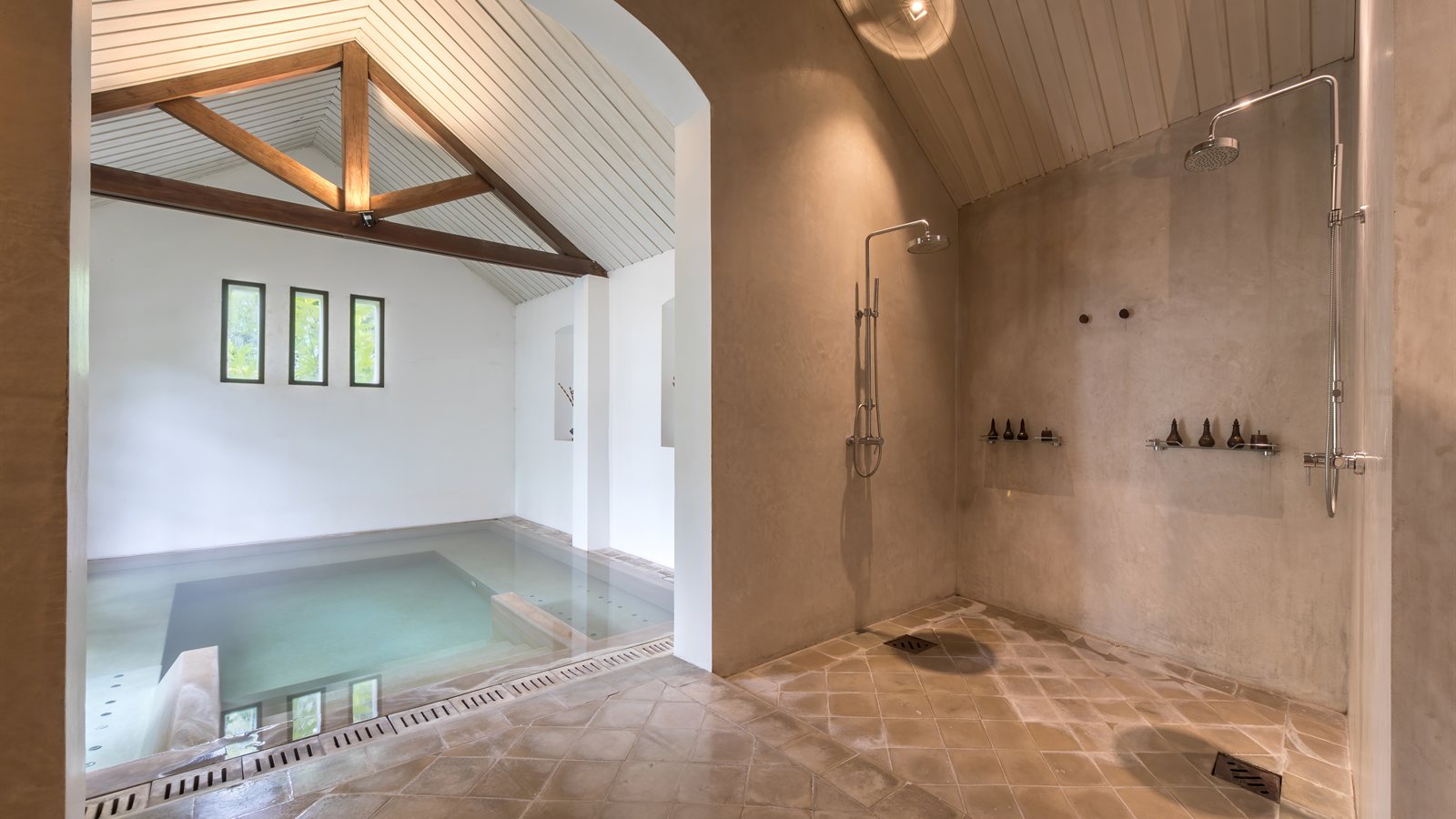
Thirty-Three Degrees, Not Twenty-Six
Seven degrees is the difference between an exercise pool and a therapeutic one. At thirty-three, muscles stop guarding, arthritic joints move noticeably further within ten minutes, circulation improves at the extremities and a body can stay still without shivering — which is what allows twenty minutes of floating work at the end of a class. Ordinary pools are kept cooler for lane swimmers and lifeguard comfort, which is precisely why so many people with pain try aquatic exercise once and never return.
Weightless Enough to Move Freely
Chest-deep water removes roughly seventy per cent of body weight, so knees, hips and spines that hurt within two minutes of a land class can work for forty. The same water provides resistance in every direction, which strengthens without loading, and it catches you when balance fails — so people who are frightened of falling will attempt things they would never try standing on a mat. That combination is why post-operative and post-injury clients progress faster here than on land.
You Do Not Need to Swim
Every class is held in water shallow enough to stand in, and about a third of our members cannot swim at all. Floats, noodles, belts and wall bars provide support, teachers are in the water beside participants rather than instructing from the side, and nobody's face has to go under at any point. Non-swimmers are told this plainly before booking, and the first session is spent simply becoming comfortable rather than following a sequence.
Breathing Becomes the Point
Water pressure on the chest makes the exhale slightly harder and the inhale slightly deeper, which turns breath work from an abstract instruction into something physically obvious. Combined with warmth and the absence of visual distraction when floating with the ears submerged, it produces a state most people find far easier to reach than in a quiet room. Our meditation sessions rely on this rather than on any particular tradition or terminology.
Twelve People, Two Teachers
Classes are capped at twelve with a second teacher present whenever there are participants with significant limitations, so adaptations happen individually rather than being announced to the room. Everyone's history is known: which shoulder does not lift, which hip was replaced, who is pregnant, who becomes anxious with their ears underwater. New participants have a short conversation before their first class, and adjustments are prepared in advance rather than invented mid-session.
Getting In and Out Made Easy
For many of our members the hardest part of a pool is the changing room and the ladder. Both pools have wide steps with handrails on both sides, a hoist, a level shallow end and a rail all the way round. Changing rooms are warm, private and step-free, with benches at a height that suits a stiff hip, and there is somewhere to sit and drink tea afterwards. These are the details that determine whether somebody comes back in February.